8 Kitchen Features That Read as Dated
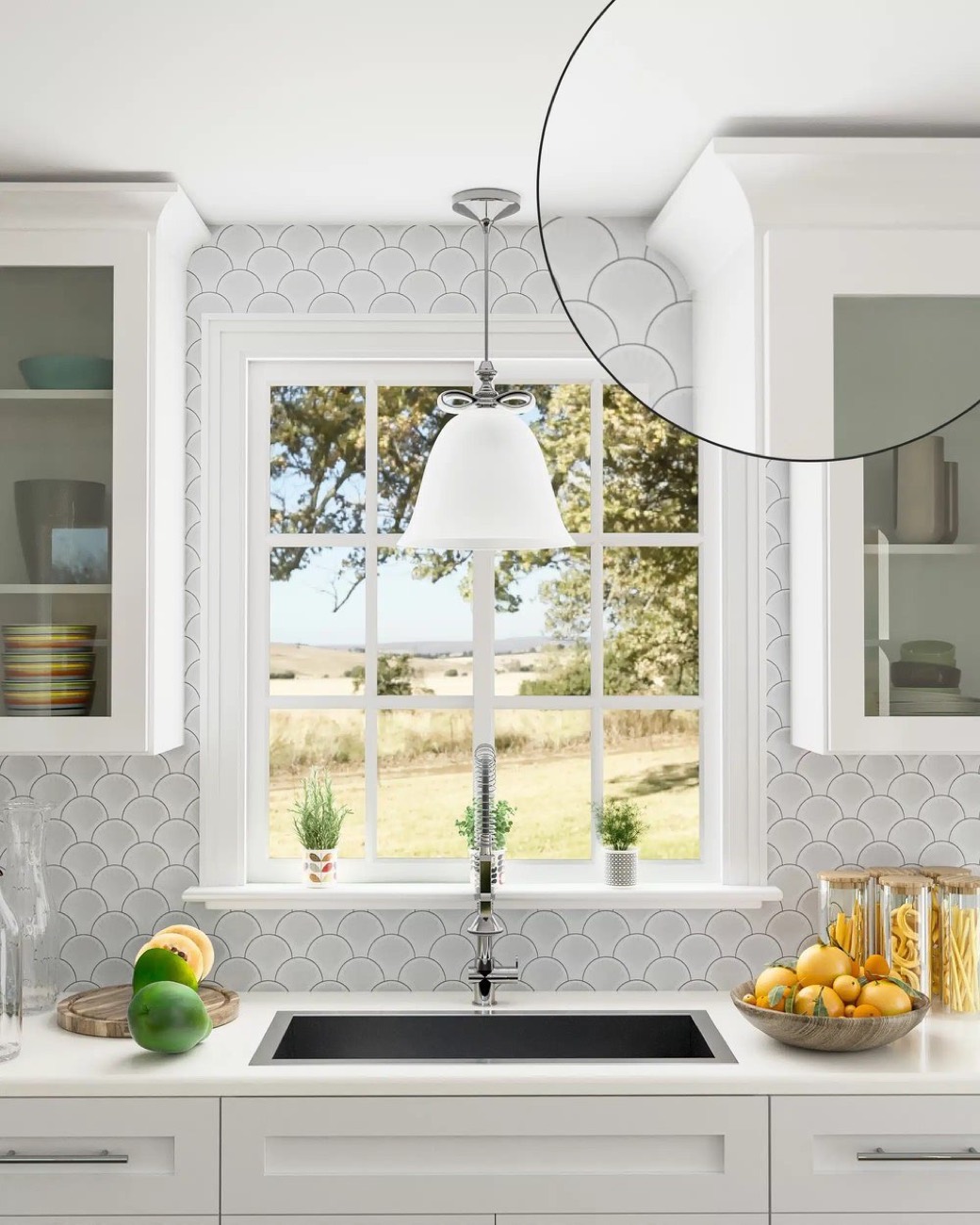
A kitchen has to last. Most designs need to hold up for ten years or more, which means the features that age fastest are the ones worth catching early.
Some are structural leftovers from an older build. Others are choices that felt luxurious in one era and now read as tired.
The good news is that most are fixable, and the ones that are not still tell you what to avoid the next time you renovate.
The pattern across every dated kitchen is the same: it commits too hard to one moment.
The most durable modern kitchens pair frameless slab-door cabinetry and quartz surfaces in a neutral palette with a few current details that swap out easily.
Here is what to look for, and what to do instead...
- 2. Soffits
1. Crown Molding
Crown molding once signaled that a kitchen was upscale.
Mark Tobin, a kitchen designer with a large YouTube following, puts it plainly: in one era it looked glorious, but today it dates a space. It is also miserable to install.
"You waste three feet before you get the cut in the right shape," Tobin says, noting that ceilings are rarely level and good craftsmen are hard to find.
What to do instead
Skip it. Tobin recommends cleaner lines like a smaller trim for a timeless result.
Crown molding still suits highly traditional styles such as French country or farmhouse, but for most kitchens it is no longer a must-have.
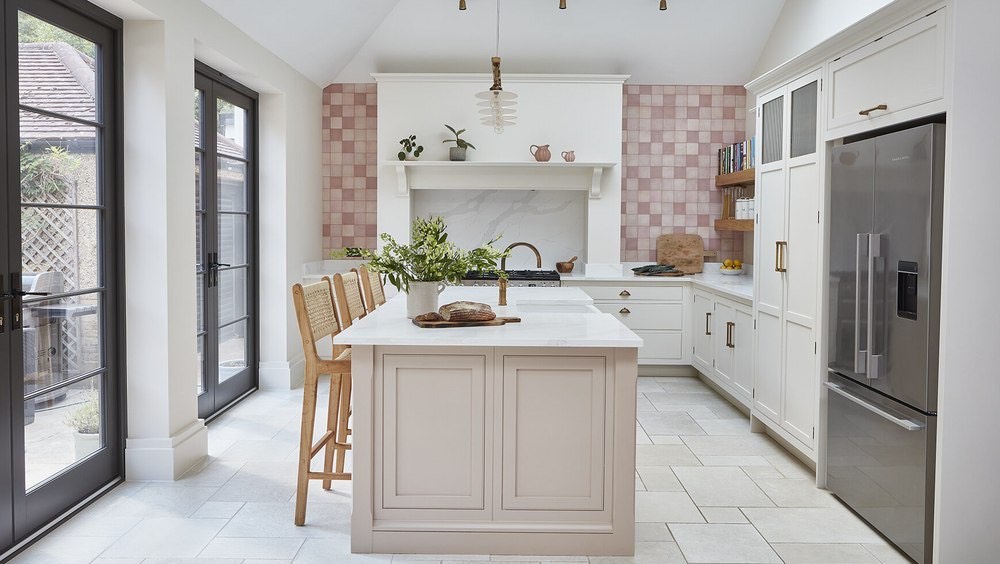
DIY tip
Tobin warns that DIYers tend to butcher crown molding cuts. If you want more presence at the ceiling, a simple flat trim is far more forgiving to install yourself.
2. Soffits You Do Not Need
Soffits are the built-out boxes above cabinets that typically hide plumbing or wiring. Many survive remodels for one reason: they were part of the old layout, not because they do anything useful.
Left in place, unnecessary soffits shrink the room visually, drop the perceived ceiling height, and date the kitchen.
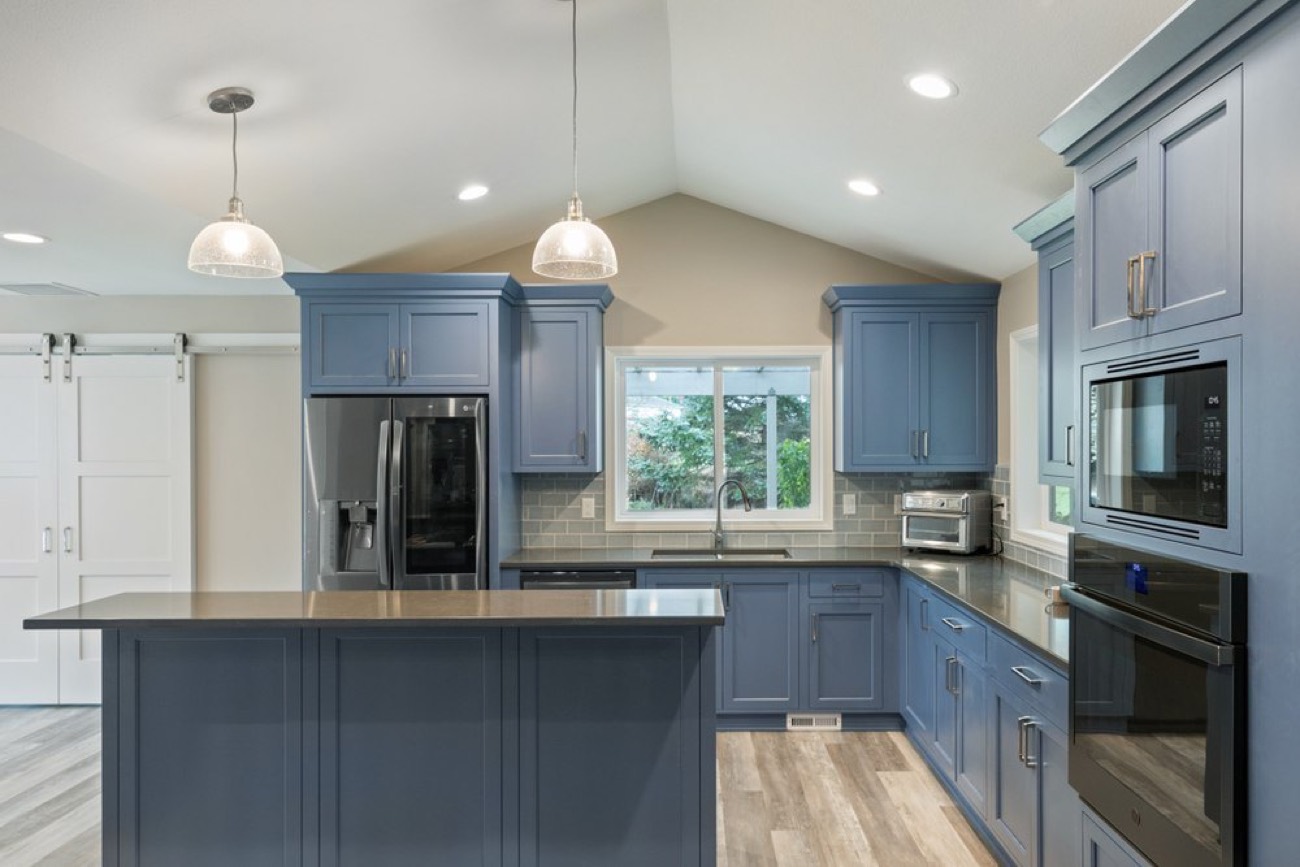
Jennifer Beget, principal at J Beget Designs, recommends removing soffits and running cabinetry to the ceiling.
She says this makes a kitchen look bigger, more deliberate, and more luxurious. You do not need fully custom cabinetry to do it.
Budget tip
Beget notes that upper extension boxes can sit above standard uppers and be finished in the same paint or stain and trim, creating a built-in look without custom fabrication.
3. A Fully Colorful Kitchen
Color everywhere is the fastest route to a dated room. A fully colored kitchen is expensive, slower to source, and potentially overwhelming.
Keep the large surfaces neutral and add a single colorful standout appliance. A stove works well as that pop of color because it is already a natural focal point.
Bold whole-room color schemes are a risk to resale value; one accent is not.
Styling tip
Keep the classic elements classic. The best designs play it safe on cabinets and countertops and experiment with trends in smaller items like wall decor and accessories.
4. Choosing Tile Last
Tile carries a lot of visual weight, yet it is often left until the end. Jamie Chappell of Fireclay Tile calls choosing tile too late one of the biggest kitchen design mistakes.
Left as an afterthought, it can unbalance the whole design or cause delays because of lead times and measurements.
Chappell recommends picking tile early, in step with cabinets and countertops, so the elements come together from the outset. Think of tile as the trim that connects cabinets to countertops rather than a solo statement.
Order tile samples the same week you settle on cabinet color. Matching them in the space beats matching them on a screen.
5. Seamed, Busy Countertops
Countertops crowded with seams and competing patterns read as older. Quartz, an engineered stone, now accounts for nearly half of all new countertop installations.
Choose fewer, higher-quality materials over a mix of many. Large-format quartz slabs create fewer seams and a cleaner look.
A waterfall edge, where the slab carries on over the end of an island to the floor, makes a modern focal point. For an industrial alternative, concrete countertops work too.
Set the quartz against one natural surface, such as a wood island top or a stone shelf. A single warm material keeps an all-quartz kitchen from feeling cold.
6. Ignoring Hardware in the Design
Hardware is easy to change later, which is exactly why it gets overlooked.
Treating it as an afterthought rather than part of the cabinetry decision is a common mistake, even though hardware should be considered alongside cabinetry from the start.
When you use pulls, choose long horizontal ones and keep the finish simple: brushed stainless, a matte black, or a warm brass all suit a modern scheme.
For a cleaner look, handle-less cabinets rely on push-to-open catches or built-in finger grips.
Asidrama 10 Pack 3 Inch (76mm) Champagne Bronze Kitchen Cabinet Handles, Brushed Brass Cabinet Pulls
New hardware is one of the cheapest updates available. Swapping dated knobs for horizontal pulls refreshes a kitchen without touching the cabinet boxes.
7. Poorly Scaled Cabinets and Islands
Scale is a quiet source of dated, awkward kitchens. For example, cabinets too shallow to hold everyday serving pieces, and islands so deep the center becomes unusable.
Both hurt how comfortable and functional a kitchen feels.
Cabinets need to fit your actual dishware, and islands should be sized so you can reach every inch.
Beyond the usual arrangement of sink, stove, and refrigerator, zone-based planning with distinct areas for prep, cooking, cleaning, and storage works well, especially in larger or open-plan layouts.
A multi-level island with a lower prep section and a raised bar keeps function and casual dining separate without adding footprint.
8. Trend-Chasing Everything
The most reliable way to date a kitchen is to make it entirely trend-led. Something built around a single moment will look tired within a year or two, and painting an entire kitchen one bold color follows the same path.
Anchor the room in enduring choices. Shaker cabinets have proven their staying power, slab doors offer flat modern panels, and natural wood finishes in warm neutrals such as oak or walnut age well.
Then experiment in the details that swap out cheaply.
Put your trend budget into wall decor and accessories, not cabinets. Those are the pieces you can replace when the look shifts.
The Throughline
Every dated feature above shares one flaw: it locks the kitchen into a single era.
The fix is consistent across all eight. Keep the expensive, permanent surfaces classic and neutral, invest in fewer high-quality materials, and reserve experimentation for the details that come off with a screwdriver.
Build for the decade the kitchen has to last, and let the trends live in the accessories.
Have a question about this story? Write to us — we answer every message.
 8 Japanese Home Features Worth Borrowing for Your Own Space
 How to Make Over an Ensuite Bathroom on a Budget
 The Case for Charcoal Blue Kitchen Cabinets in 2026